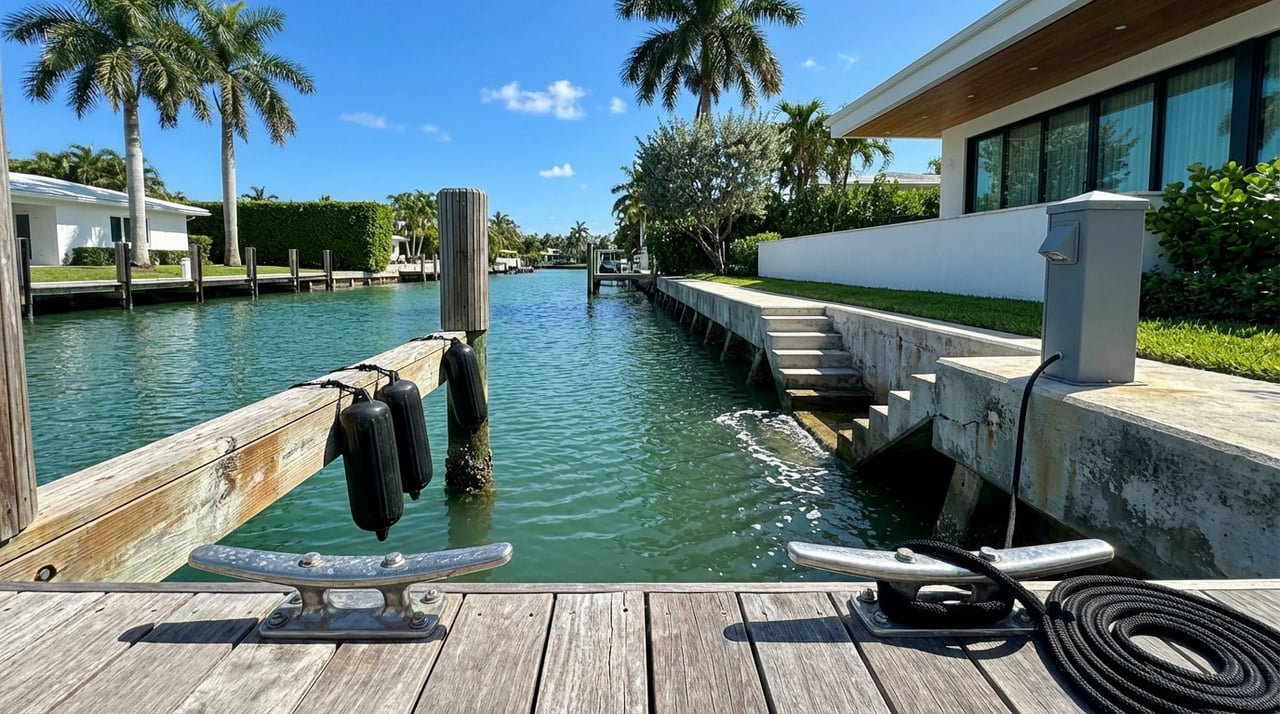
If you love being on the water, the right Coral Gables address can make boating effortless. Yet two places that look equally “bayfront” on a map can feel very different once you factor in depth, dock size, wake, and service access. You want a home that fits your yacht as well as your lifestyle. This guide shows you how boat owners evaluate Sunrise Harbour and the Edgewater Drive corridor so you can match the property to your vessel with confidence. Let’s dive in.
What boaters really check
“No‑bridge” vs real on‑water fit
“No fixed bridges” only speaks to air draft. It does not guarantee depth, basin width, or turning room. You still need to confirm length overall, beam, draft, and the space to pivot safely at your dock. For broader routing, know your bridge options on the way to the ocean. The Venetian Causeway has low clearances and draw schedules, while the MacArthur Causeway and Rickenbacker bridges provide high fixed clearance suitable for many flybridge yachts and sailing routes. Always confirm current operations and vertical clearances in official notices from the Coast Guard and related publications such as the Federal Register bridge notices and regional navigation guides like Waterway Guide’s Biscayne Bay overview.
Depth and private canals
NOAA charts are authoritative for bay channels, but private residential canals and inlets can silt over time. Do not rely on a listing or a chart to assume private depths. Use NOAA charts to plan your bay routes, then commission a hydrographic survey at mean low water to verify depth at your dock face and along the turn into your canal. For channel references, review NOAA chart products such as the West Palm Beach to Miami chart.
Dock geometry and turning room
Seawall frontage and advertised dock length help you estimate usable berth size, but they do not confirm where the piles are, how wide the fairway is, or whether you can turn a larger hull without rubbing neighbors. Measure the space, note pedestal locations and lift permits, and run a trial with your captain if possible.
Sunrise Harbour vs Edgewater: on‑water experience
Sunrise Harbour: sheltered and intimate
Sunrise Harbour is a guard‑gated enclave of mostly waterfront single‑family homes on compact peninsulas. The canals are calm and well sheltered from bay chop and through‑traffic wake, which makes daily dock life quieter and line handling easier. Many owners keep center consoles, bay boats, sportfish, and express cruisers, with some 30 to 55 foot motor yachts fitting where dock length, beam, and depth allow. Larger flybridge yachts may be possible only on lots built for them and where turning room exists. Verify by survey.
Edgewater Drive corridor: bigger water and bigger slips
Along Edgewater Drive and the Gables Waterway, you see a mix of estate homes with very wide frontage and inlet slips, plus smaller condo buildings with community or leased dockage. Estate‑scale properties often handle larger yachts or multiple vessels thanks to broader waterway width and deeper inlet pockets. You will also feel more open‑bay exposure, with more wake and chop than in a tight, protected finger canal. Condo parcels typically limit slip size to tenders or smaller boats.
Access to marinas, fuel, and service
Day‑to‑day support nearby
Even with a private dock, many owners rely on nearby marinas for fuel, pump‑out, transient berths, and technician access. The City of Miami operates major facilities, including Dinner Key and Miamarina, with slips, pump‑out, and mooring options. Review operating details on the City of Miami marinas page.
Heavy refit and haul‑out
For haul‑outs and major refits, most large yachts use Fort Lauderdale yards that specialize in heavy repair and refit capacity. Lauderdale Marine Center is a regional example within that network. Explore regional capability via Lauderdale Marine Center’s listing.
Permits, environment, and policy to plan around
Seawalls and dock work
Waterfront improvements in Miami‑Dade typically require state environmental review, possible US Army Corps authorization, and local permits. In 2025, Miami‑Dade updated seawall and bulkhead permitting to create an expedited path for certain replacements and to formalize timelines and reporting, including support for some living‑seawall approaches. Review the county legislative record for scope and process in Miami‑Dade item 251313.
Seagrass and design constraints
Biscayne Bay supports extensive seagrass, and managers may require dock design measures like projection limits, minimum elevations, grated decking, or mitigation to reduce shading and prop scarring. Budget for benthic surveys early if you plan dock changes.
Wake, speed, and evolving rules
Miami‑Dade has studied additional boating‑restricted areas, including idle or numerical speed zones in parts of Biscayne Bay, in response to safety and wake concerns. Such changes can affect transit times and neighborhood wake exposure. Track county actions in legislative files such as Miami‑Dade item 240464.
Hurricane readiness
City marinas maintain formal hurricane plans that outline evacuation, mooring, and in‑water tie‑up protocols. Private marinas and major yards contract limited haul‑out slots well before storm season. For larger yachts, confirm a written storm plan and secured haul‑out arrangements ahead of time.
Which boats fit where
- Sunrise Harbour: best aligned with center consoles, bay boats, and mid‑size express or motor yachts where the specific dock has the length, beam clearance, and depth. Larger yachts are case‑by‑case and need verified turning room and soundings.
- Edgewater Drive corridor: estate lots with wide, deep inlet slips can host larger yachts and multiple vessels. Condo buildings typically limit residents to smaller craft or leased slips.
Buyer checklist for waterfront fit
Use this list to validate any listing before you fall in love with the view.
- Document the dock: usable berth length between pilings, pile spacing, cleat layout, and finger pier geometry as built.
- Commission a hydrographic sonar survey at mean low water and check tidal tables. Confirm depth at the dock face, canal entrance, and inside turning points. Use NOAA charts for bay channels, not for private canals. See NOAA chart products like 11467 for regional context.
- Confirm who is responsible for seawall and dredging. Review easements, plat notes, HOA covenants, and recent permit history with the county and FDEP. See the county’s seawall process in Miami‑Dade item 251313.
- Analyze turning room: measure basin width and length, and if possible run a simulated maneuver with your captain.
- Verify shore power and water: pedestal locations, amperage available, and whether a lift is installed or permitted.
- Request recent bathymetric surveys and as‑built dock plans. Ask about any recorded dredging and prospects for future work.
- Insurance and hurricane plan: get the marina or HOA hurricane plan in writing and consult your yacht insurer on acceptable in‑water tie‑ups or required haul‑outs. Review City marina plan details on the Miami marinas page.
- Environmental constraints: determine if the shoreline lies within protected habitat and whether seagrass or other resources will shape future dock design.
Putting it together
Both Sunrise Harbour and the Edgewater Drive corridor deliver direct access to Biscayne Bay. Sunrise Harbour rewards you with protected canals and quieter dockside living, which suits dayboats and many mid‑size cruisers. Edgewater’s broader frontage can fit bigger yachts and multi‑vessel setups, but with more open‑bay energy at the slip. The best fit comes from matching your LOA, beam, draft, and turning needs to a specific property, then confirming permits, service access, and storm logistics.
Before you make an offer, commission a hydrographic survey and a written confirmation of dock/seawall permitting and hurricane procedures from the marina or HOA.
If you want a discreet, boat‑first search in Coral Gables with access to private offerings and calm, expert guidance, connect with Renier Casanova for a private consultation.
FAQs
What does “no fixed bridges” mean for Coral Gables buyers?
- It addresses air draft only. You still must verify depth at mean low water, usable dock length, beam clearance, and turning room for your specific vessel.
How do Sunrise Harbour canals handle wake and chop?
- The narrow peninsulas and small canals are well sheltered, so daily wake is typically reduced compared to open bayfront segments.
Is Edgewater better for larger yachts than Sunrise Harbour?
- Often yes on estate lots. Wider frontage and inlet slips along Edgewater Drive can support larger yachts, while Sunrise Harbour tends to favor mid‑size boats unless a lot was built for bigger hulls.
Which charts should I use to check depth?
- Use NOAA charts for bay channels, then commission a private hydrographic survey at mean low water to confirm depths in residential canals and at the dock.
What permits are needed for seawall or dock work in Miami‑Dade?
- Expect state environmental review, possible Army Corps authorization, and county or city permits. Miami‑Dade’s 2025 updates created an expedited path for certain seawall replacements.
How should I plan for hurricanes if I keep a yacht at home?
- Secure a written hurricane plan that your insurer accepts. Many owners tie in at managed marinas or reserve off‑site haul‑out with professional yards well before storm season.