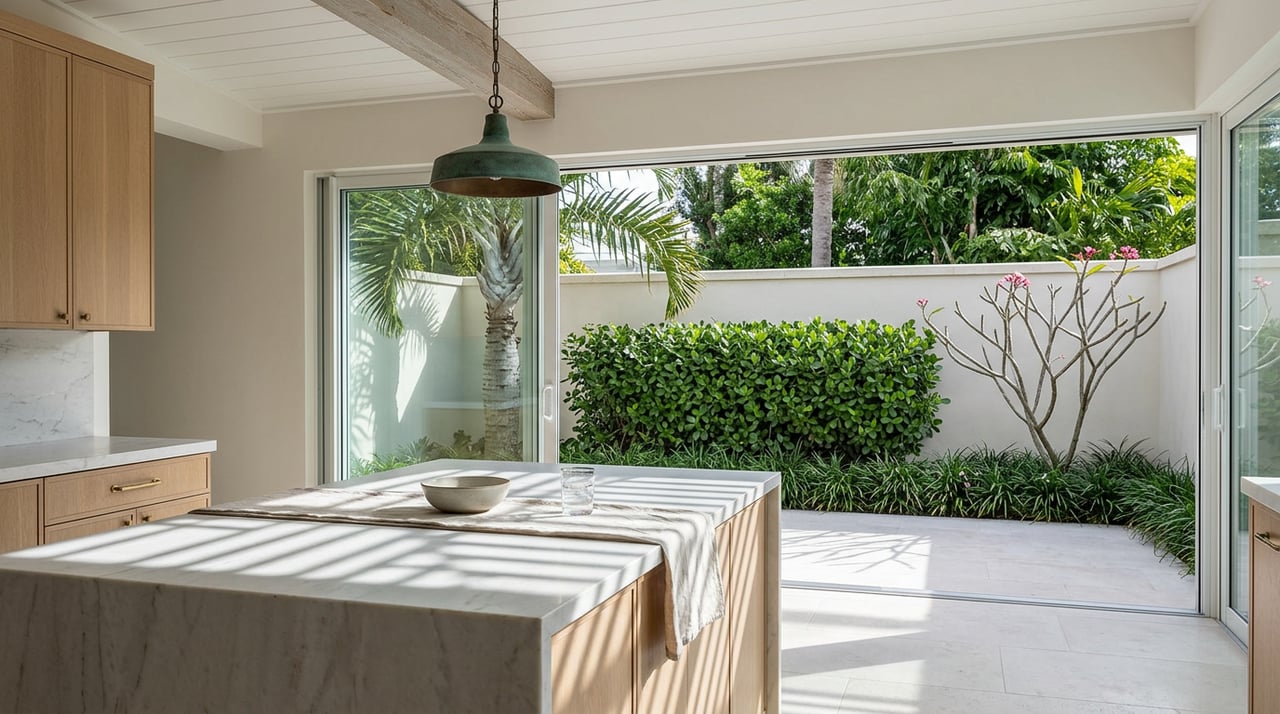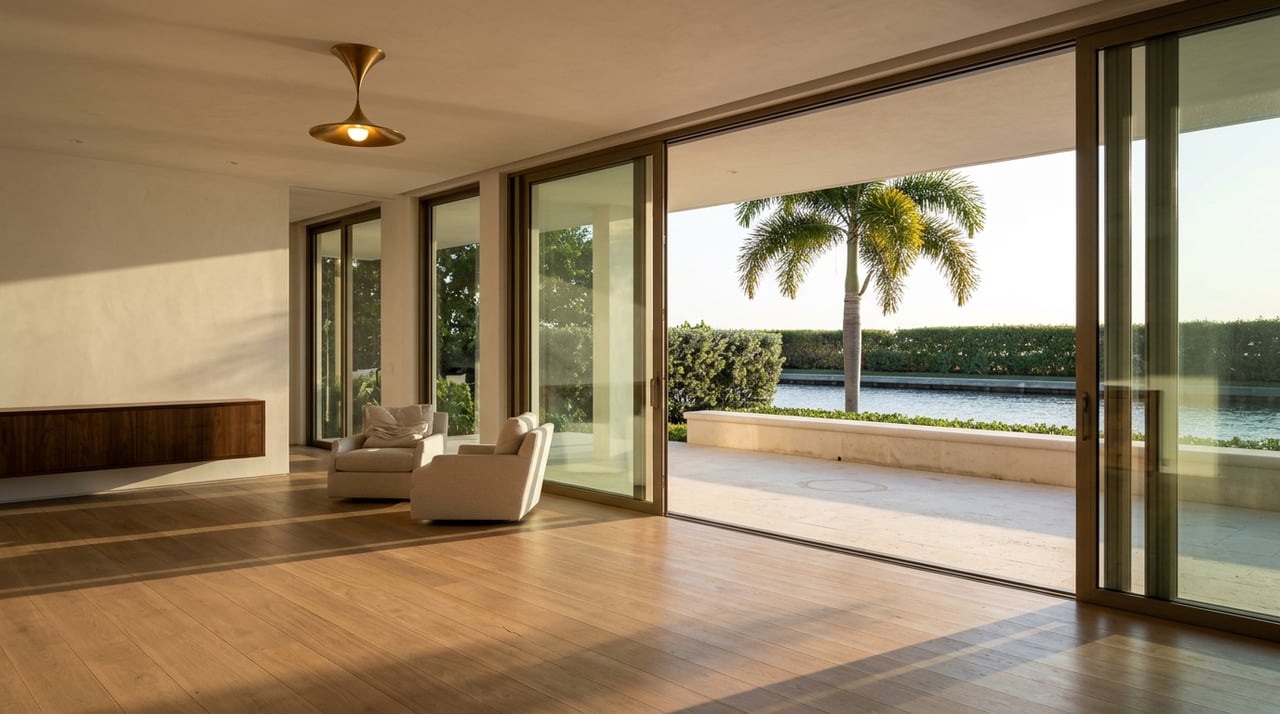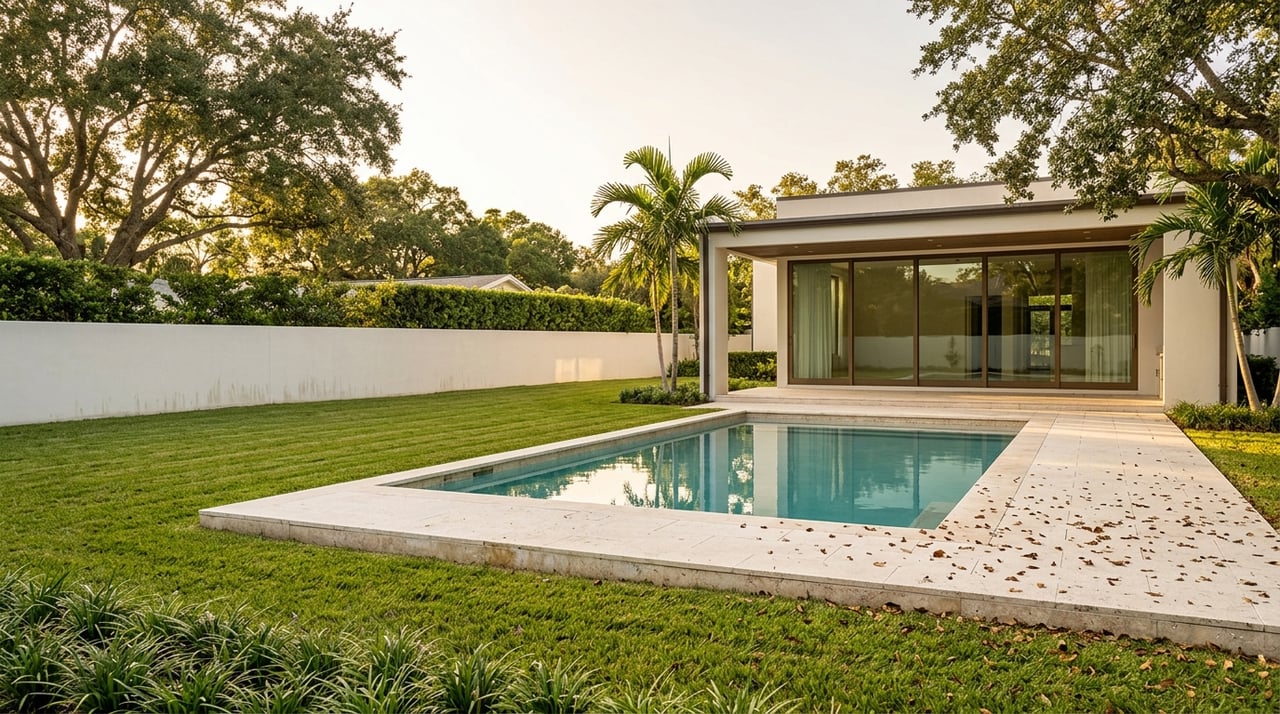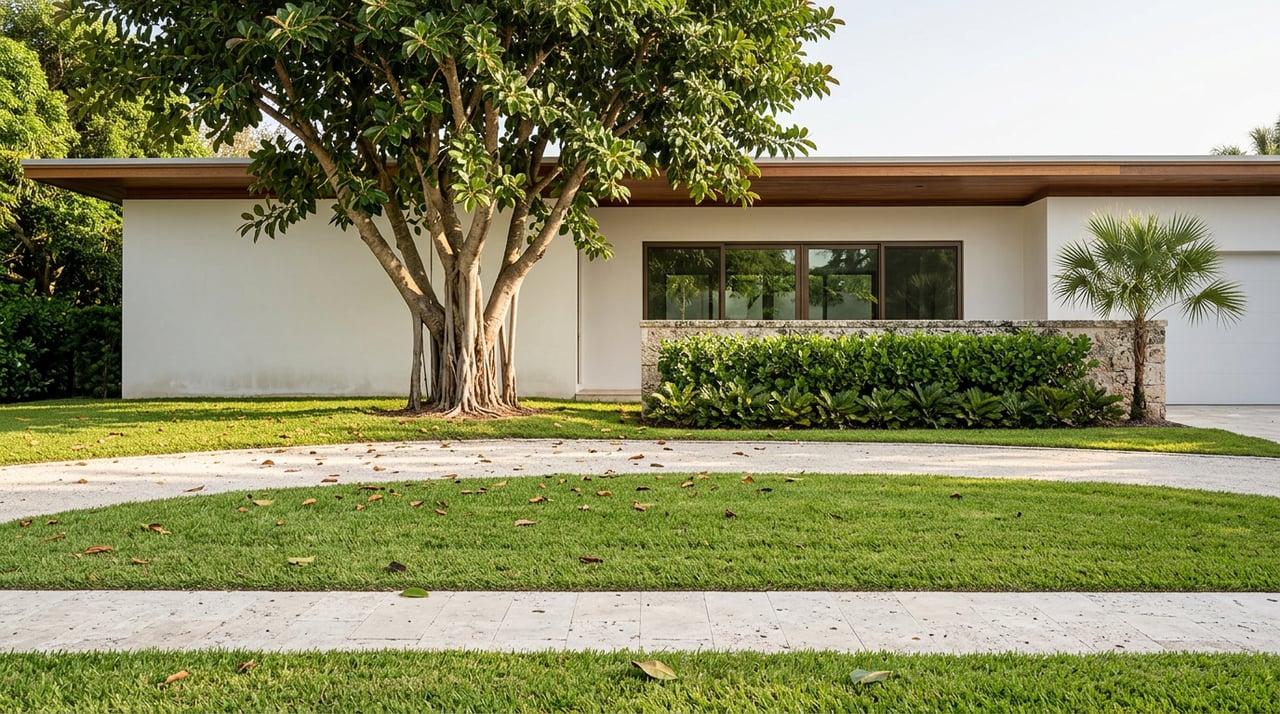
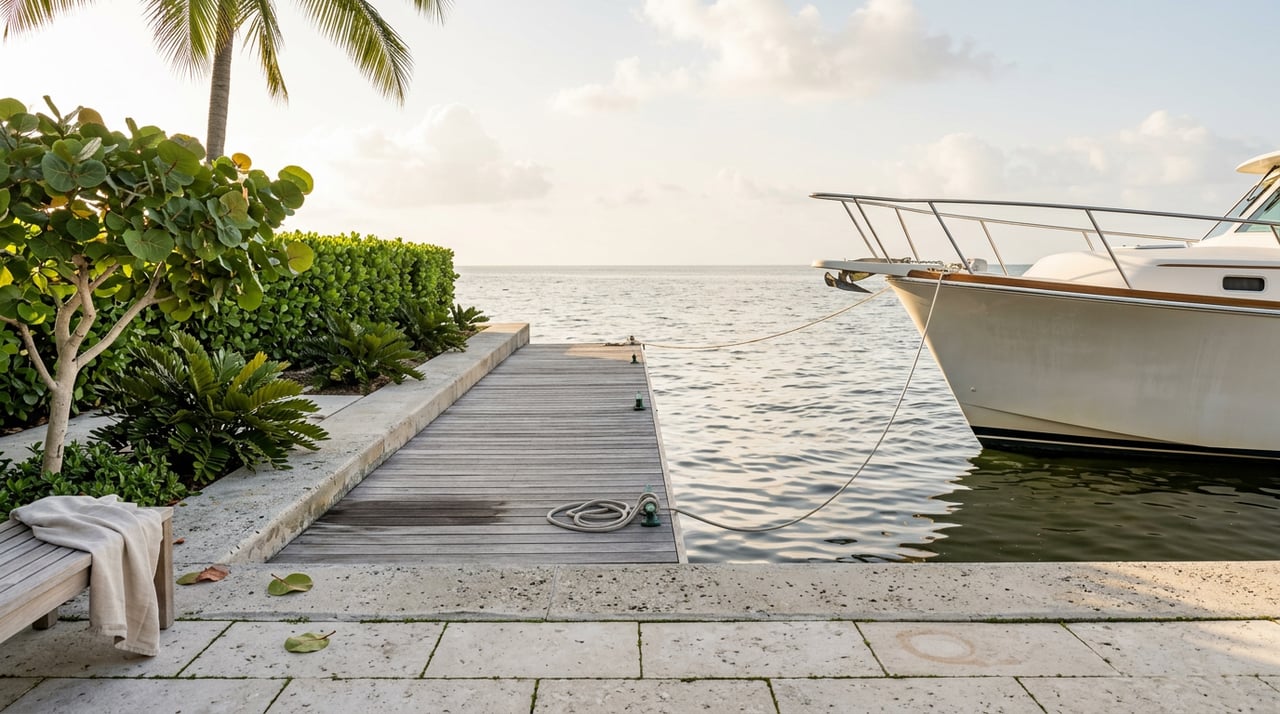
In July 2026, Sean Combs sold his Star Island estate for $55 million. He had paid $35 million for it in 2021. The property sits near the entrance to the island, on a 1.3-acre bayfront lot with 240 feet of water frontage, a pool, a spa, and a dock. The main house was built in 1940 and expanded in 1995.
That is the headline most outlets ran with. It is not the interesting part.
The interesting part is where the lot sits and how many feet of water touch it. On an island with only about 30 homes, position and frontage do more pricing work than square footage, celebrity provenance, or even the name on the gatehouse sign. Compare three recent transactions across Star Island, Palm and Hibiscus Islands, and the Sunset Islands, and a pattern emerges that most comparison guides skip past: the island's name tells you almost nothing about what a given dollar buys. The frontage does.
The Sale Near The Entrance
Combs' buyer, an entity called JFStar LLC led by John A. Franklin of Virginia Beach, paid roughly $229,000 for every linear foot of water frontage on that lot. That is one data point, not an index, but it is a useful one because Star Island trades so rarely that every sale becomes a benchmark.
Star Island has seen real turnover since the pandemic began. Billionaire hedge fund manager Ken Griffin now controls about 6.5 contiguous acres on the island. Developer Vlad Doronin sold his estate there for $120 million in 2025, a record at the time for Miami-Dade County. Billionaire Russell Weiner paid $35.3 million for a property that previously belonged to Rosie O'Donnell, and rapper Rick Ross boosted the mortgage on his Star Island home to $35 million this past March, three years after buying it for the same amount.
None of those four transactions tell you the same story about value. A $120 million sale and a $35 million refinance sit on the same island but describe entirely different lots, entirely different frontage, entirely different builds. That is the first thing worth sitting with before you compare islands: even within one island, the range is enormous, and the variable driving it is rarely the house.
Frontage Is The Currency, Not The Address
A different sale on the Sunset Islands in 2025 closed at $27.5 million for a home with roughly 11,340 square feet of interior space and 156 feet of water frontage. Work the math the same way and that sale priced out closer to $176,000 per linear foot, noticeably below the Star Island figure.
That gap is not a coincidence of two random transactions. It reflects something structural. Open-bay frontage without a fixed bridge overhead lets an owner keep a larger vessel and reach the ocean without a clearance ceiling. That feature is not uniform even within a single enclave. It has to be verified lot by lot, because some Sunset Islands parcels sit on interior canals with lower bridge clearances while others open directly onto the bay.
On Star Island, buyers are not really pricing the house. They are pricing the linear feet in front of it, and how directly those feet connect to open water.
That distinction matters more than most comparison content admits, because it means two houses of similar size and finish level on the same island can carry very different values depending on which side of an invisible waterline they sit on.
What Palm And Hibiscus Buy Instead
Palm Island runs about 82 acres and Hibiscus Island about 69 acres, together holding somewhere around 300 homes, a far deeper bench than Star Island's roughly 30. That larger inventory changes the economics. Entry pricing on Palm and Hibiscus starts closer to $6 million rather than the $25 million-plus floor on Star Island, and the enclave functions less like a trophy row and more like a quiet, guard-gated residential neighborhood with a shared park and tennis and basketball courts.
Because there is more supply, improvements still carry real weight in the price. A well-built house on Palm or Hibiscus is not automatically a teardown the way it often is on the scarcest Star Island lots. Buyers here are choosing a lived-in, boat-friendly neighborhood at a meaningfully lower entry point, not competing for one of thirty irreplaceable addresses.
The Land Math On Sunset Islands
The Sunset Islands make the underlying logic even more explicit. In early 2025, an off-market Sunset Islands property traded for $16 million as a teardown, bought for the land rather than the existing structure. That is not an unusual outcome on premium frontage across these three enclaves. Buyers at this level frequently underwrite the land basis, add projected construction cost and carrying costs, and measure the total against the finished value of comparable new estates nearby. The lot's dimensions, setbacks, and buildable envelope set the ceiling on that finished value long before anyone draws a floor plan.
This is why a modest, older house on the right frontage can outprice a larger, newer one on a canal lot two streets over. The structure is a placeholder. The land is the asset.
Why The Median Stopped Telling The Whole Story
Here is where the broader market data changes the comparison. In the second quarter of 2026, the median single-family sale price across the Miami Beaches rose 77 percent year over year to $4.9 million, while the average sale price rose only 35 percent to $8.3 million. Closings climbed 37 percent year over year to 129 sales, the strongest second quarter in four years, with sales above $5 million more than doubling and sales above $10 million nearly tripling compared with a year earlier.
A median jumping faster than an average sounds backward at first. Normally a handful of very large sales pulls the average up faster than the median. What that gap actually signals here is that the bottom of the luxury tier is rising to meet the top, even as ultra-high sales keep multiplying. Buyer depth has increased across the entire premium band, not just at the very top. For someone comparing Star Island, Palm and Hibiscus, and the Sunset Islands right now, that means competition for the best frontage on all three enclaves is intensifying at the same time, not just at the record-breaking end of the market.
Matching The Budget To The Frontage, Not The Island
Put together, the three enclaves are not really competing tiers of the same product. They are three different answers to the question of what water access is worth to a given buyer.
- Star Island offers the scarcest inventory and the highest price per foot of frontage, priced for buyers who want unobstructed bay access and are comfortable treating most existing structures as replaceable.
- Palm and Hibiscus Islands offer a deeper bench of homes, a quieter residential rhythm, and an entry point roughly a quarter of Star Island's floor, where improvements retain more of their value.
- The Sunset Islands price almost entirely on frontage type: open bay, protected canal, or interior lot, with no-fixed-bridge access functioning as a specific, verifiable, and separately priced feature rather than a general amenity.
The mistake in most head-to-head guides is treating "island living" as a single product with three brand names attached. The data above says otherwise. The right comparison question is not which island, but which frontage, verified parcel by parcel, against what you actually plan to keep at the dock.
Frequently Asked Questions
Does a house on these islands ever hold value the way the land does? On premium frontage, existing structures are often treated as a starting point for new construction rather than the primary source of value. On Palm and Hibiscus Islands, where inventory is deeper and lots are more uniform, well-maintained homes retain more of their own value relative to the land beneath them.
Is no-fixed-bridge access guaranteed on every waterfront lot in these enclaves? No. It varies by parcel even within the same island, particularly on the Sunset Islands, where some frontage sits on interior canals with lower bridge clearances. This is something to verify for a specific address before assuming a boat of a given size will have unrestricted access.
Why did Star Island see so much turnover after 2020? Public reporting on recent sales, including Vlad Doronin's $120 million transaction and Ken Griffin's expanding footprint, points to sustained demand for the island's scarce, unobstructed bayfront lots rather than any single cause.
If you are weighing a purchase across Star Island, Palm and Hibiscus, or the Sunset Islands and want the frontage, bridge clearance, and land economics run against your specific budget and boat, Renier Casanova and the Casanova Group offer a private consultation to work through the numbers parcel by parcel before you make an offer.